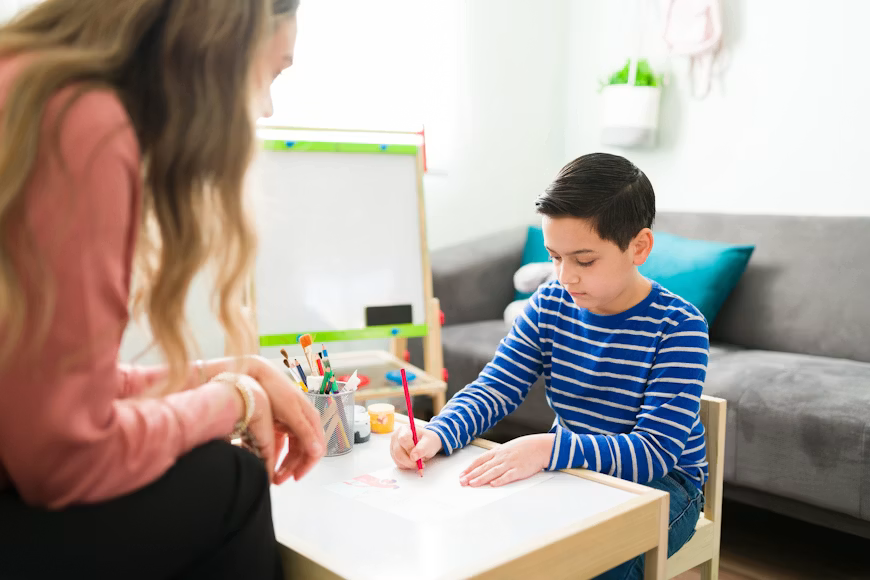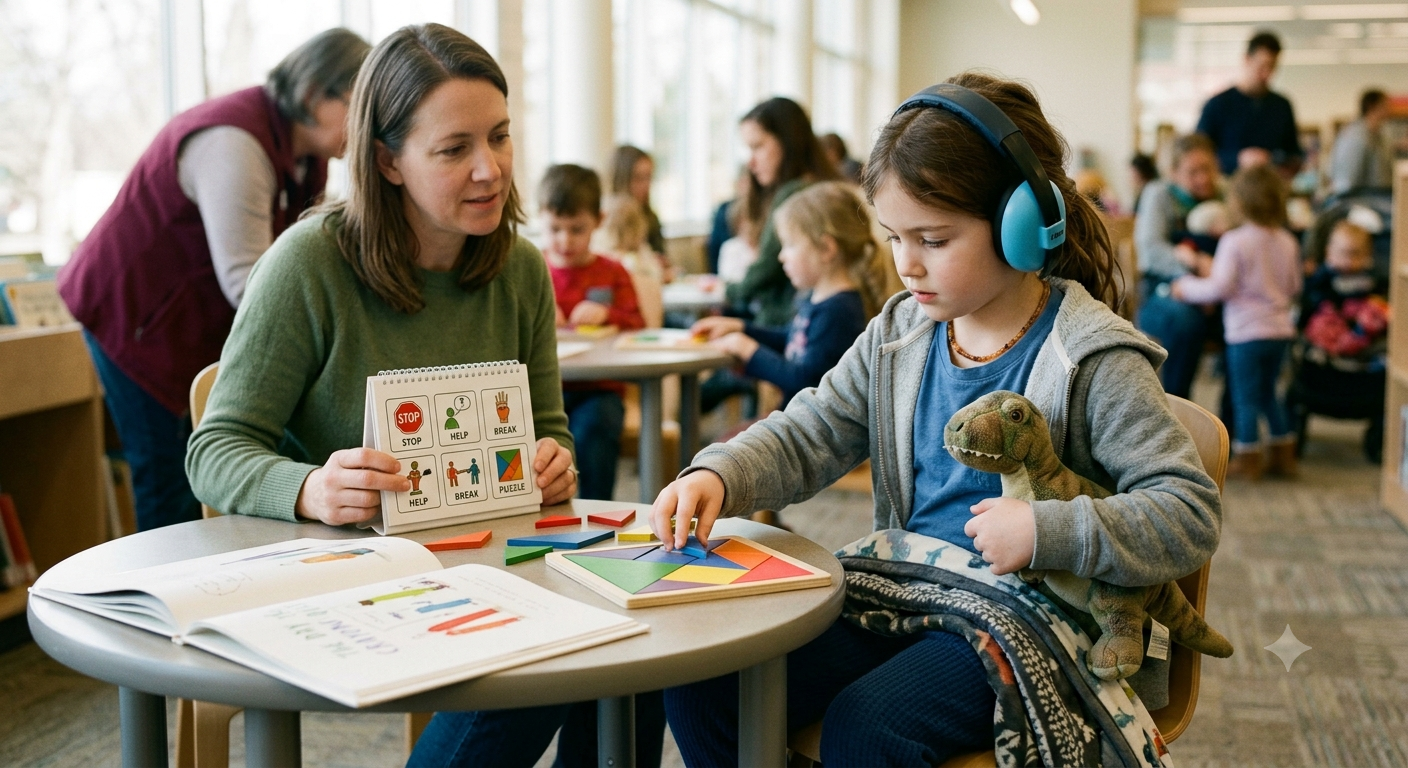

Many questions arise for the parents of autistic children who cannot communicate appropriately. This is an extremely emotionally charged subject for the entire family. These questions relate to the child’s future existence, his understanding of his environment, and how he communicates his feelings.
The term “non-verbal Autism” is very popular whenever people talk about autism and the absence or presence of verbal communication of autistic patients. Specialists advise calling it a nonspeaking autism these days. Why?
Words alone cannot suffice in verbal communication. This means that a lack of words does not imply that a person cannot think, learn, understand, and socialize with others. This happens in many cases and involves finding alternative ways for a child to communicate.
Some kids communicate through signs, drawings, writing, or typing, and many can also learn to write. They think and feel just like anyone else. This guide explains nonspeaking (nonverbal) autism in simple terms. It will also include its causes, early signs, treatment, and how it can be used to help an individual communicate well with ABA.
What to know about Non-Verbal Autism?
The term non-verbal autism essentially refers to individuals with autism who fail to learn spoken language or rely on only limited words in order to communicate. This is a good place to stop and clarify one thing: Non-verbal autism is not a unique diagnosis in and of itself. Instead, it is a way of describing how communication occurs in individuals with ASD. Research indicates that up to 25% to 30% of children with autism are either non-verbal or only marginally spoken. Parents may find these statistics frightening, but one thing is certain: they don’t convey the whole story. All children follow their own developmental course. Some children develop their speaking skills late during their childhood. But some may continue to rely on alternative modes of communication even into their adulthood. Speaking involves making sounds. On the other hand, communication involves expressing one’s needs and thoughts as effectively as possible, regardless of whether verbal communication is involved. For example, children who cannot speak can communicate by:- Gestures
- Facial expressions
- Sign language
- Picture-based systems
- Writing
- Speech-generating devices
- AAC (Augmentative and Alternative Communication) tools
Does Nonspeaking Mean Intellectual Disability?
In short, not really. One of the most difficult misunderstandings in terms of children with autism spectrum disorder is the misconception that because the child cannot speak, the child understands nothing. This assumption is wrong. Children with autism have more knowledge than they can express, despite their inability to talk. A youngster with autism can make decisions, gather information, follow instructions, understand their environment, and recognize others’ emotions. The only problem that arises here is that of communication. This is best understood as having many thoughts and concepts but simply being unable to speak about them. This is why the presumption of competence is apt in such cases. The presumption of competence is defined as an assumption that the child comprehends and knows everything that kid needs to know. If the child receives proper communication support, the child demonstrates many abilities.What Are The Reasons for Communication Problems in Autism?
The fact is that there is no single cause that leads to problems with speech among autistic children. Rather, there are various reasons behind this situation.Communication Problems Related To Social Skills
Children with autism have problems communicating because of the condition they are suffering from. The main problems with communication among children include those associated with turn-taking, joint attention, and social communication.Motor Speech Disorders
Children can sometimes know what they want to communicate, but it can be difficult for them to coordinate their bodily movements while communicating. One disorder associated with this problem is childhood apraxia of speech. It involves difficulty with planning and coordinating mouth movements during communication.Difficulties with Sensory Processing
People with autism are sensitive to touch, sound, and light. The child finds it more difficult to communicate when there are more stimuli in their surroundings.Problems With Symbolic Language
Language involves comprehending that symbols represent objects, actions, or concepts. Some kids have a problem with such symbolism, which may also affect their imagination and language development.Warning Signs for Parents to Look Out For
Communication issues become evident at an early age, often before a kid turns 2. There is individuality in child development, but some warning signs include:- No babbling or babbling little before 12 months
- Little use of words from 16-24 months
- Not consistently responding to their name
- Poor eye contact
- Struggle to use body language such as pointing and waving
- Trouble expressing desires
- Lack of interest in social interactions
- Challenges in reciprocal communication
- Delayed language developmental skills compared to those of other children their age
How Do Kids with Non-Verbal Autism Communicate?
One critical aspect parents have to know about autistic kids is that they all communicate in one way or another. They still communicate, even if there is no speech at all.Using Gestures and Body Language
Usually, an autistic kid uses gestures such as pointing, touching, nodding, and making facial expressions to lead their caregiver to what they want.Sign Language
Some children learn sign language as a structured way to express needs, emotions, and ideas. It can be a powerful bridge toward communication.Picture-Based Communication Systems
Picture systems allow children to use images or symbols to communicate what they want or need. These systems often reduce frustration and help children feel more understood.Writing and Typing
As some children grow, writing or typing becomes a strong communication tool, especially when spoken language is limited.AAC Devices
AAC (Augmentative and Alternative Communication) devices include tools such as tablets and speech-generating devices. These systems allow children to select words, symbols, or pictures that produce spoken output. The American Speech-Language-Hearing Association (ASHA) mentions AAC tools as an effective means of supporting communication in non-speaking individuals. In many cases, they give children a clear and reliable “voice.”The Importance of Early Intervention
Developing communication skills becomes quite simple with early assistance. Studies have shown that early assistance to kids helps them develop the communication skills needed to interact, socialize, prepare for school, and achieve greater independence in day-to-day activities. The earlier support comes in, the more opportunities children have to develop the skills they require. Early intervention does not emphasize only verbal communication but helps children to communicate in any other way that is most comfortable for them. Some common signs of improvement by families include:- Communication skills
- Social interaction
- Play development
- Independence in daily routines
- Emotional regulation
- Adaptive skills
How ABA Therapy Can Support Communication Development?
One of the most widely researched and applied methods for assisting children with autism is Applied Behavior Analysis (ABA). At Positive Pathways ABA, communication is at the heart of every child’s treatment plan. This program aims to help every child develop effective communication skills in everyday life. The main principle of ABA therapy is the study of how each child learns and the development of individual strategies for communication and appropriate behavior. Therapists may help children work on:- Requesting what they need or want
- Building early communication skills
- Improving attention and engagement
- Developing social interaction skills
- Reducing frustration-related behaviors
- Increasing independence in daily activities