
If you are a newbie to ABA therapy, you might be wondering how it will benefit your child. As a matter of fact, ABA therapy is just one of those intervention techniques that use knowledge of behavior to teach skills. Although it works more often with autistic children, there is no reason why it cannot work with other people.
Unlike other therapies, which often involve speculation, this type of intervention is anchored in learning techniques. Children are introduced to skills systematically, with guidance and support. The primary objective of the process is to encourage positive behavior and reduce negative behavior.
One thing that distinguishes this method from others is its applicability. Skills learned through therapy are reinforced through practical application of behavior. It helps children use what they know in everyday life.
The CDC (2023) reports that around 1 out of 36 children in America is diagnosed with autism spectrum disorder (ASD).
Here’s what the ABA approach focuses on:
- Development of new skills, including social and communication skills
- Improvement of concentration, attention span, and memory
- Positive modification of undesirable behaviors
- Promoting independent functioning
Many parents take reassurance from the fact that therapy approaches are designed specifically for their kids. It means there are no general programs applied to all patients; everything is tailored to each child’s strengths and weaknesses.
What is ABA Therapy?
Applied Behavior Analysis (ABA) is a science-based therapy and behavior treatment. It concerns the mechanics of behavior, what influences it, and how to perfect it.
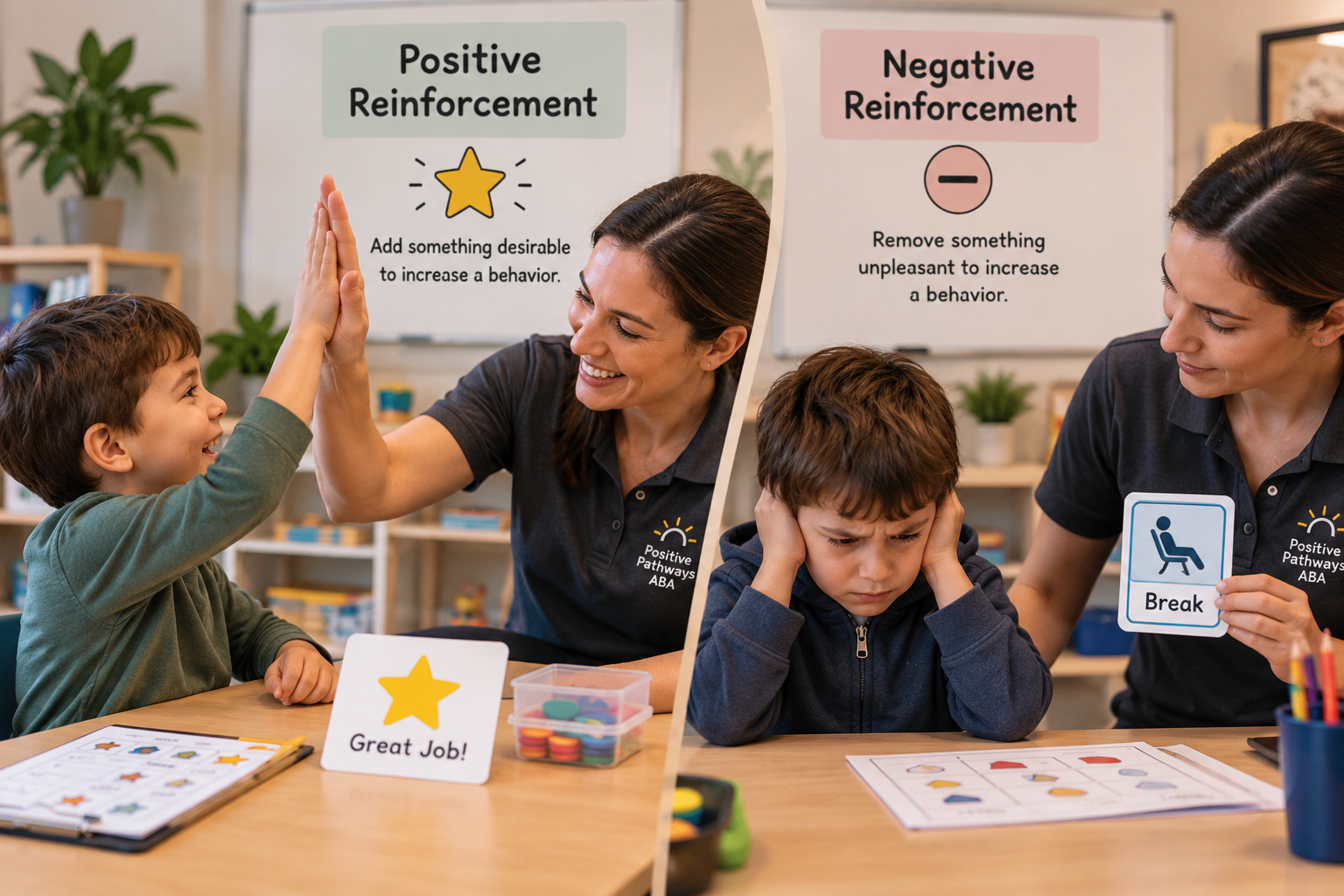
In simple terms, ABA teaches positive behaviors and discourages negative or difficult behaviors with reinforcement. An example is when the child is rewarded for behaving in a way he or she desires. This increases the likelihood that that behavior will recur.
ABA is primarily applied to children with autism, but it may be applied to those with other developmental or behavioral difficulties. The treatment follows a plan and is periodically evaluated to assess progress.
Why ABA Therapy is Widely Used
There’s a reason why this therapy is often called the gold standard for autism support. It has been investigated for decades and has had numerous successes. Many organizations have acknowledged its effectiveness, including major medical organizations.
Among its advantages is flexibility. It can be customized according to the age, experience, and personal needs of each patient. This can be from a child learning how to talk to one learning about social skills.
Parents often notice improvements in areas like:
- Communication and language development
- Social interaction and play skills
- Attention and focus
- Daily routines and independence
Another reason it is widely used is its focus on real-world applications. Children don’t just learn skills during sessions. It enables them to put these to use in their day-to-day lives, both at home and even in school.
Core Principles of ABA
Applied Behavior Analysis (ABA) builds on straightforward scientific principles that focus on the learning of behavior and how it can be enhanced in the long run. These principles assist therapists in understanding the reasons for a behavior and in finding improved alternatives in a well-organized, positive manner.
The environment influences behavior is a central concept in ABA. One can influence behavior by modifying the preceding or succeeding behavior to move it in a favorable direction. The ABA is not guesswork-based. It usually involves observation, data, and repeated approaches to achieve actual progress.
Key principles include:
-
- Positive reinforcement: The reinforcement of a desired behavior by providing rewards to get more of it.
-
- Antecedent-Behavior-Consequence (ABC): The knowledge of what occurs before and after a behavior.
-
- Task breakdown: Breaking down large and intricate skills into small and simple steps.
-
- Consistency: The same strategies are applied in the course of sessions and settings.
-
- Data tracking: Keeping track of progress to make changes to the strategies.
These principles combine to form a clear, measurable learning process for each individual.
Basic Elements of an ABA Tantrum
An ABA session is flexible and structured to suit the child’s needs and the rate of his/her learning. The goal of each session is to work on a particular area, such as communication, social skills, or behavior. The therapist engages the child through a combination of instructional methods and games.
Sessions are normally initiated with what has been learned to establish comfort, and new skills are then presented gradually. Reinforcement is applied during the session to support the positive reactions and keep morale boosted.
Elements of an ABA session are usually:
-
- Warm-up activities: It should begin with simple or favorite exercises.
-
- Teaching of skills: The introduction of new behaviors or enhancing already existing behaviors.
-
- Repetition and practice: Consolidating learning by practicing.
-
- Positive reinforcement: It involves the use of rewards such as praise, toys, or activities.
-
- Behavior observation: Response and trigger identification.
-
- Data collection: Documentation of action throughout improvement.
Every session is carefully planned to promote progress and successful learning.
Who Can Benefit from ABA Therapy
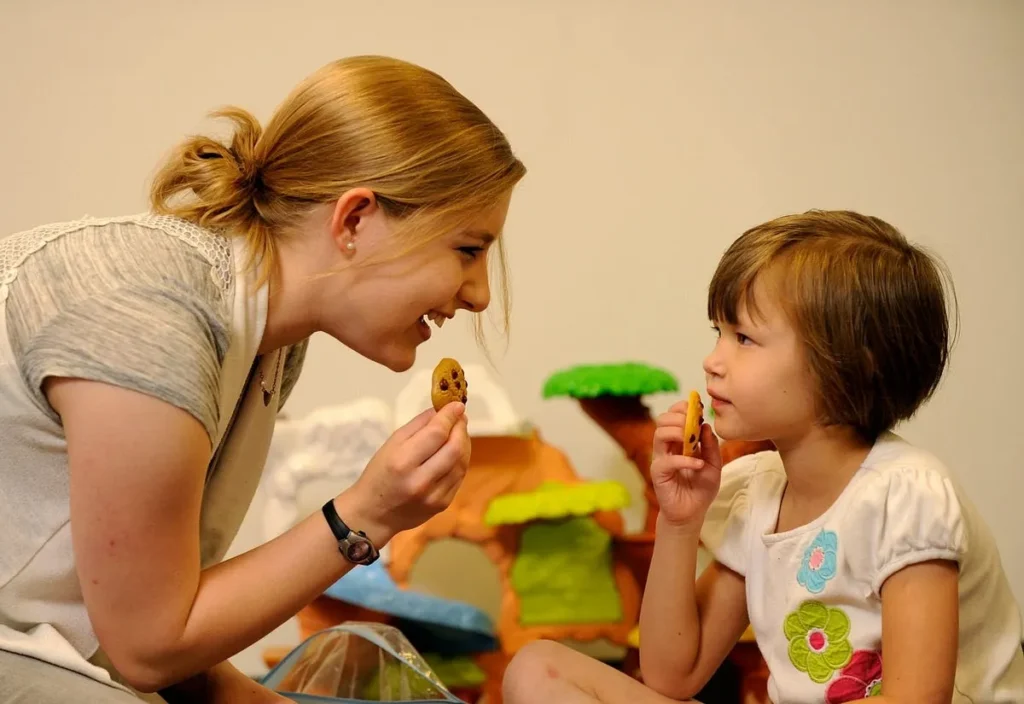
ABA therapy is primarily associated with children with autism, though its advantages are not limited to that. It can accommodate those with speech, learning, attention, and behavioral difficulties.
Children under the age of 6 are those who benefit most, as their brains are more flexible and responsive to early intervention. ABA can also help older children, teenagers, and even adults improve in such aspects as communication, independence, and daily routines.
The key is personalization. Because ABA therapy in Brooklyn are customized to the unique environment and needs of the community, they can be adapted to various ages, abilities, and long-term objectives.
Basic ABA Therapy Techniques Used By Professionals
ABA therapy includes several structured teaching methods. Each one is used depending on the child’s needs and learning style.
1. Discrete Trial Training (DTT)
DTT is a highly structured teaching method in which skills are broken down into small steps. Each skill is learned separately through repetition and reinforcement. For instance, color or object recognition can be introduced first through matching games, then progressed to verbal recognition.
2. Natural Environment Teaching (NET)
NET focuses on learning through everyday activities. Learning does not happen through a fixed set of table activities but rather through playing, eating, or other activities of daily living. In fact, a child can learn to make toy requests during play.
3. Pivotal Response Treatment (PRT)
The treatment method involves developing important skills, such as motivation and social initiation. Any development of these vital skills leads to the development of many other aspects of behavior and communication.
These techniques are generally combined to form a stimulating and effective learning process. One factor behind the widespread use of ABA is that it combines structure and entertainment.
Common Misconceptions and Myths About ABA Therapy
ABA therapy has a lot of misconceptions. A popular myth is that it is too harsh or mechanical. In practice, contemporary ABA emphasizes positive reinforcement and child-centered approaches and is often based on play-based learning.
The other misconception is that ABA attempts to transform a child into a different person. It is not intended to modify personality, but to enable the kid to acquire positive life skills and mitigate bad habits. Some believe that only young children benefit from ABA. Although it is best administered at a young age, it can also be used by people of various ages.
Where Does ABA Therapy Take Place?
Based on the child’s needs, ABA therapy may occur in various environments. It is usually given at home, where the child is comfortable and not threatened.
It may also be administered in clinics, schools, or special therapy centers. Both settings have their advantages. An example is that, when one is at home, it is good to have a session where daily routines are being adopted, whereas in school, social interaction is being enhanced.
Often, therapy is a combination of settings to ensure the child can practice acquired skills in practical life.
Where to Start with ABA Therapy
The ABA therapy starts with an evaluation done by an expert, typically a Board-Certified Behavior Analyst (BCBA). They assess the child’s strengths, difficulties, and needs.
Based on this, an individualized treatment plan is developed with specific objectives. There is also guidance on how parents should support their child at home. Any therapy provider should be selected based on qualities such as trustworthiness, trained personnel, clear communication, and appropriate monitoring of progress. Early and constant is the key to success.
Conclusion
Applied Behavior Analysis (ABA) is an evidence-based, well-researched method that helps children develop essential life skills through reinforcement and a personalized learning plan. This method is all about results and does not concern itself with any hypothetical improvement.
When Applied Behavior Analysis is implemented properly, kids can acquire new skills that enable them to communicate, act independently, and function effectively. The best thing about this treatment is its flexibility.
Frequently Asked Questions
How long does ABA therapy take to show results?
The improvement varies from child to child, but some can be observed within a few months. There are more favorable results of long-term consistency.
Does ABA treatment only deal with autism?
No, ABA can be used to address other behavioral and developmental problems, but most often it is used with autism.
How many hours of therapy are needed?
It depends on the child’s needs. Others may need several hours a week, and some of them may need more rigorous programs.