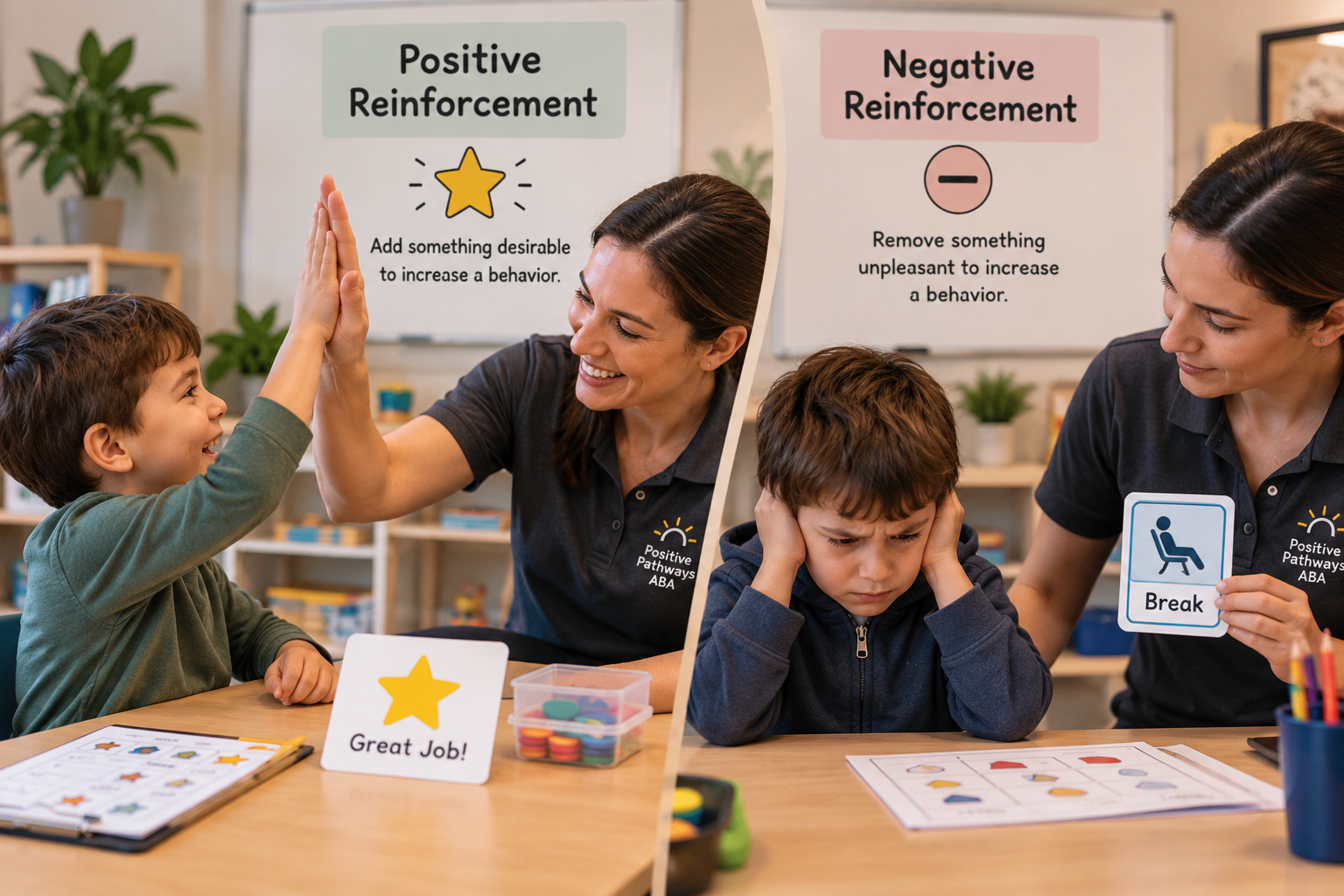

ABA is a scientific approach to therapy whose main aim is to understand and modify behavior among people. This therapy identifies the connection between behavior and environment and uses systematic approaches to foster behavioral change.
ABA is about developing functional skills in children. It does not have a generic approach to skill development but rather offers flexibility depending on the child’s needs.
ABA employs a systematic breakdown of skills to be acquired into easy-to-learn components, which are mastered through systematic training procedures. The children with autism disorder stand to gain more from using this treatment than others.
Why ABA Matters for Children with Autism
Children with autism experience problems with three main aspects: communication, socialization, and behavior regulation. ABA therapy provides direct solutions to these challenges through its various tools and strategies, which create actual positive results.
ABA program delivers two main outcomes because it helps people decrease their problems while simultaneously developing their self-sufficiency and self-assurance. The development process requires a balance between two elements that support ongoing growth.
What makes ABA unique is its ability to meet children where they are. Regardless of whether the child is non-verbal or highly verbal, ABA will take the child’s condition into account. The individualized nature of ABA ensures that children develop at their own individual rate.
Understanding All About ABA Therapy
Local Access and Growing Demand
There is a need for quality therapy services within the community since Brooklyn is a bustling and diverse area. ABA Therapy’s efficacy within Brooklyn and its availability have seen many people opt for this therapy method.
Families now have an wider range of choices when it comes to treatment, as different service providers offer this therapy across locations such as Park Slope, Williamsburg, and Crown Heights.
The increasing need for ABA services results from parents and professionals discovering its benefits. The cultural heterogeneity of Brooklyn enables therapists to devise programs that provide culturally appropriate services to clients.
The ABA program ensures that each child receives services that suit his/her needs.
Role of Certified Professionals
Professionals who hold certification as RBT and LBA conduct themselves in their respective capacities as certified professionals. Certified Professionals who deal directly with the clients develop personalized intervention plans for their respective clients.
Staff are required to use standard procedures for providing effective treatment services. Therapists deliver direct services through their work with clients who need therapy. The RBTs provide daily therapy services to children while the LBAs oversee the implementation of the therapy plan.
The two specialists make an excellent team, as they help not only the child but also the child’s family.
Core Principles Behind ABA Therapy

1. Positive Reinforcement
Positive reinforcement serves as the main rule of ABA therapy, which requires therapists to use rewards for reinforcing behaviors that they want to see their clients develop. The rewards can be given through verbal praise or through material objects, which include toys and any other items that the child finds attractive.
The system of positive reinforcement establishes between positive behavior and its resulting positive outcomes a condition that leads to the development of positive associations. The child shows major behavior transformations as a result of this.
2. An Evidence-Based Treatment
ABA serves as an evidence-based approach due to the efficiency and reliability of the scientific approach towards it. The therapy gives parents confidence that they have chosen an effective solution that meets their child’s requirements.
Therapists use data to monitor patient advancement while modifying their treatment approaches. The intervention system uses data analysis to develop better treatment methods that adapt to the changing requirements of each individual child.
3. Verbal Communication Development
The main advantage of ABA therapy leads to better communication skills for individuals who undergo treatment. From fundamental to sophisticated language skills, the therapists support kids as they develop their language skills. Young individuals are taught how to ask for goods, communicate their emotions, and respond to inquiries.
People require these skills since they must use them to engage with others and carry out daily tasks. Although it takes a long time to build these skills, doing so significantly alters a person.
4. Nonverbal Communication Strategies
ABA recognizes that children with nonverbal communication abilities require different forms of communication. Therapists teach alternative communication methods, which include gestures and sign language, and communication devices.
The tools enable children to express their needs through effective communication. The process of communication goes beyond spoken language because it serves to build connections and share understanding between people.
5. Behavioral Support and Management
Challenges arise for families whenever family members exhibit troublesome behavior. Tricky behavior refers to both aggression and self-injurious behavior. ABA treatment helps in identifying the cause of such behaviors before taking necessary action to solve them.
Rather than opting for the extinction of problematic behaviors, therapists focus on studying the causes. The team uses this method to create successful techniques that will decrease the frequency of the problem.
6. Teaching Functional Alternatives
Instead of being encouraged to act out, kids are taught healthy ways to communicate and manage their emotions.
Their behavior and general well-being improve as a result.
7. Social Skill Development
The main challenge that autistic children have while attempting to interact with other people is that they lack social skills. ABA establishes sharing and taking turns, and play participation as essential educational objectives.
The methodical process helps people attain both confidence and comfort through its stepwise development. Group sessions enable children to develop their social abilities through interactions with other children.
Therapists lead the social interactions by offering both assistance and evaluation to the participants. The educational environment replicates authentic life events, which enables students to learn more effectively in their practical studies.
8. Academic Skill Development
- Early Learning Foundations: ABA therapy also supports academic readiness. Children learn foundational skills like matching, sorting, and following instructions. These skills prepare them for classroom environments and future learning.
- Focus, Memory, and Cognitive Development: Children will learn better concentration and memory through practice and learning sessions. Focus and memory are important for learning.
9. Daily Activities and Self-Sufficiency
- Self-Help Skills: ABA therapy can teach the child how to complete tasks for self-care, such as brushing his/her own teeth, getting dressed, washing themselves, and using the toilet.
- Consistency & Structure: It is crucial for consistency in ABA therapy because children will be happier when they have clear expectations.
Choose ABA Therapy Programs depend upon your needs
-
In-home Therapy: In-home therapy enables children to learn within their own space. This might make them more at ease and attentive.
-
Center-based Therapy: The centers offer well-structured environments that are built precisely for learning purposes.
-
Community-based Therapy: Therapy can be done in naturalistic environments such as parks and stores, giving children practical opportunities to use what they have learned.
ABA Therapy Plan
Each child starts off with an initial assessment. The purpose of this is to determine what they excel at and where they need to improve. Once this is done, a tailored program is developed for them.
Family Involvement and Collaboration
Parents play a vital role in ABA therapy. They are trained to reinforce skills at home. Consistency between home and therapy ensures better results and faster progress.
ABA Therapy Techniques Used
- Structured Learning: Structured sessions focus on specific goals and skills, ensuring steady progress.
- Play-Based Learning: Play is used as a natural way to engage children and teach skills in a fun, interactive manner.
Benefits of Early Intervention
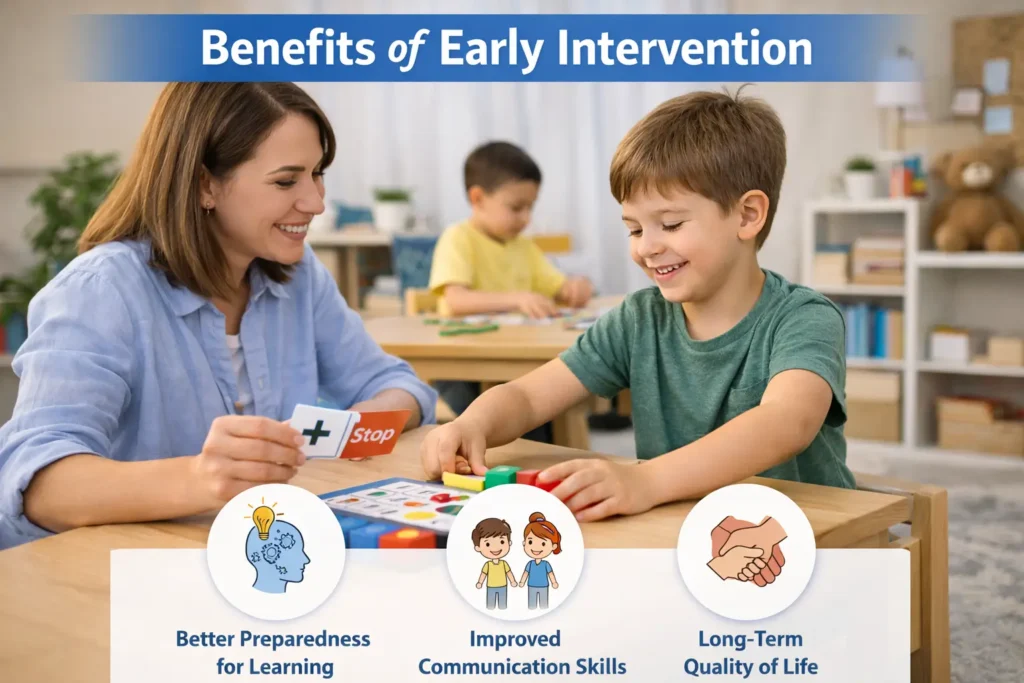
The foundation of effective autism support, which provides effective treatment for autistic children, is built on early intervention. The brain reaches its highest level of adaptability during the first three years of a child’s life.
Children develop better learning skills for new behaviors, communication methods, and social patterns because of their natural ability to adapt, which scientists identify as neuroplasticity. When families begin ABA Therapy in Brooklyn early, they are essentially giving their child a developmental head start.
Another result of early ABA treatment is the development of communication skills. Individuals with autism have problems with both expressive and receptive communication; however, through early ABA treatment, these skills can be built up gradually.
- Expressive Communication (Speaking/Gesturing/Devices)
- Receptive communication (understanding instructions and language)
Therapists begin their work with children by teaching them to use pointing and single-word speech to make requests for items and actions. The students develop their communication skills through practice of advanced speech skills, enabling them to construct complete sentences and participate in substantial discussions.
The initial training process establishes a foundation that prevents children from developing communication skills as a learned ability that becomes challenging to master.
Better Preparedness for School and Learning
Youngsters who have gone through ABA treatment in their early years are likely more ready for the school environment.
The important things that they gain include:
- Being able to follow instructions
- Ability to sit and pay attention for long periods of time
- Active participation in group work
- Familiarity with the processes followed in the class
With such characteristics, it becomes easy for the children to get accustomed to the environment at the educational institution. In case the child lacks these characteristics, he/she would struggle to integrate with other people.
Long-Term Influence on Quality of Life
The positive results that come out of early interventions not only benefit the children in their childhood, but also later in life.
They may:
- Express their requirements effectively
- Build relationships
- Attend to their daily duties
- Function within social and work settings
The lasting effect of therapy is one of the key reasons why parents opt for therapy in the early years. It goes beyond short-term gains; it helps prepare your child for an independent future.
Why Select ABA Therapy in Brooklyn?
When choosing ABA Therapy in Brooklyn, it is important to be cautious and deliberate, as not all therapies yield optimal results. Here are some considerations when selecting a therapy service.
A reliable therapy provider should:
- Develop personalized treatment plans
- Hire certified therapists (RBTs, LBAs, BCBAs)
- Implement evidence-based techniques
- Keep parents informed of their children’s progress
This way, your child will get the best care.
Evaluating Professional Credentials and Expertise Evaluation
The qualifications of the staff are among the initial things to consider when making the choice about the service provider.
Applied behavior analysis is a highly specialized area, and obtaining appropriate certification guarantees that the therapists are adequately prepared for working with patients with complicated behavioral issues.
- RBT: Registered Behavior Technician
- LBA: Licensed Behavior Analyst
- BCBA: Board Certified Behavior Analyst
Questions to Ask Before Choosing an ABA Therapy Provider
Before committing to a provider, it’s important to ask the right questions:
- What is the assessment process like?
- How are treatment plans developed?
- How often will progress be reviewed?
- What role do parents play in therapy?
These questions help you evaluate whether the provider aligns with your child’s needs and your family’s expectations.
Conclusion
Selecting the appropriate provider of ABA Therapy in Brooklyn goes beyond selecting the right service. The selection process enables parents to identify a professional team that will guide their child through his/her journey of development from the beginning of his/her life.
Whether in terms of early intervention or personalization and flexibility, the proper selection of providers guarantees a great deal in the development of a child. Careful selection of providers is vital to ensuring your child receives quality, efficient therapy services.