
You may have various questions when your child gets an autism diagnosis, just about how they learn and grow. You may explore different therapies or learn about Applied Behavior Analysis (ABA) therapy. You may also wonder what skills ABA therapy uses or how it can support your child in everyday life.
ABA therapy uses different teaching approaches to help children just to learn useful skills. These may include talking, social skills, playing, day-to-day activities, learning, or telling others what they want. Approaches such as positive reinforcement, modeling, practice, or prompts can help children learn. Goals for each child are actually changed. An ABA program can be adjusted to match your child’s desires, strengths, interests, or family goals.
Important ABA Therapy Techniques That Help Children Learn
ABA therapy uses different techniques to help children learn new skills, practice them, and use them in daily life. Each child learns differently. A qualified Board Certified Behavior Analyst (BCBA) can understand the child’s desires and make a therapy plan that fits them. Registered Behavior Technicians (RBTs) may help children practice these skills under a BCBA’s supervision.
Here are six common ABA therapy techniques that may help children learn and build functional skills.
1) Build New Skills Through Positive Reinforcement
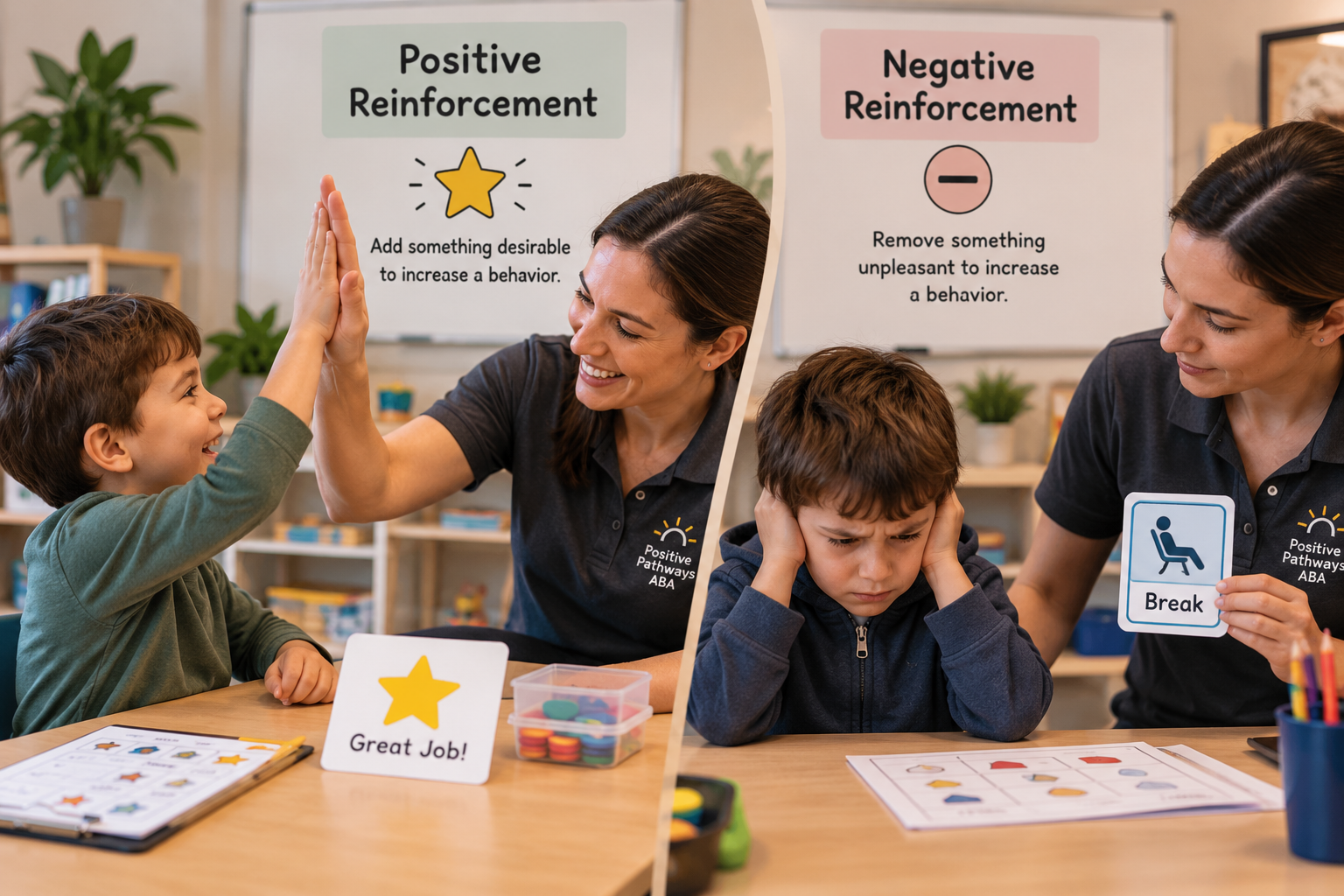
Positive reinforcement helps children to learn new skills by giving them something they like after they try a skill. It is not about bribing a child. It is about praising minor steps or making learning exciting. When a child requests help or finishes a task, positive reinforcement can help them feel good and want to learn more.
Positive reinforcement can be used in different ways:
Give praise: Parents or therapists can say kind words, just like “Good job” when a child tries something new.
Offer fun activities: A short playtime or fun activity that can help out a child enjoy learning.
Use favorite toys: Let a child play with a desired toy while practicing a new skill.
Praise small steps: Parents and therapists can praise small efforts only to help children to feel proud.
Practice at home: Parents can use positive reinforcement throughout day-to-day tasks, such as getting dressed, eating, or asking just for assistance.
The aim is to help children learn skills they can use each day. Parents and therapists can work together to find what each child likes and adjust rewards as the child’s desires and interests change.
2) Improve Social Understanding Through Modeling
Modeling can also help children learn how to act in changing social situations. A therapist may show a child how to say hello, ask a question, or share a toy. The child can watch or try the same skill when they feel ready. These simple instances help children learn what to do in changed situations. Therapists can also use ABA techniques to help children practice these skills through engaging activities or daily routines.
Parents can also model social skills at home. For example, they can show a child how to ask for help, greet a family member, or take turns during a game. Children may require time or practice to learn these skills. Parents and therapists can help by modeling the skills and offering kind support. With consistent practice, children can learn new ways to express their desires, understand others, and join social activities in ways that feel comfortable for them.
3) Encourage Helpful Responses Through Redirection
Redirection can help when a child has trouble concentrating, communicating, or dealing with changes in day-to-day routines. In ABA behavior strategies, the goal is not to force a child to stop a behavior. Instead, the goal is to guide them to a safer, better way to respond, whether by reducing tantrums or managing sensory overload. A therapist may use simple words, pictures, choices, or another activity centered on what the child desires.
For example, if a child has trouble waiting for a favorite toy, the therapist may help them request a turn or choose another activity while waiting. With consistent practice, children can learn new techniques to manage frustration, changes, and everyday challenges. This method should always be gentle and match the child’s desires.
4) Teach Small Steps With Discrete Trial Training (DTT)
Discrete Trial Training (DTT) is a teaching technique used in ABA therapy to help children learn new skills one step at a time. Each session centers on one skill. The therapist provides a simple instruction, waits for the child to respond, and then gives feedback. This helps children learn clearly and easily.
DTT can help children learn new skills, such as:
- Recognizing familiar objects, colors, or pictures.
- Following simple directions.
- Matching objects or pictures.
- Learning basic communication skills (especially helpful when supporting children with non-verbal autism).
- Practicing timely school and day-to-day life skills.
For example: when teaching colors, a therapist may ask a child to point to a red object. The child can point, speak, or use another communication method. The therapist then provides feedback or helps the child as needed.
As the child learns a skill, the therapist may gradually reduce the support they provide. DTT can help out children just to feel more confident as they learn new skills in small steps. However, not every child learns best through structured sessions. Therapists may also use play or day-to-day activities to help children practice skills in ways that fit everyday life.
5) Practice Everyday Skills Through Natural Environment Teaching (NET)
NET helps children learn new skills through activities they enjoy. A therapist may use a child’s favorite toys, games, or daily actions to teach new skills. For example, if a child likes playing with building blocks, the therapist can use this activity to teach the child to request help, name colors, or take turns. These actions help children learn in an engaging, familiar way. The aim is just to make learning a natural part of everyday life.
Parents or caregivers can also use NET at home throughout daily actions. For example, during mealtime, they can support their child in asking for a favorite food or choosing between two options. Throughout playtime, they can help the child practice sharing or expressing their desires. A therapist can show parents how to help their child learn without putting pressure on them. This method gives children more opportunities to practice new skills and use them in normal life.
6) Build Communication and Daily Living Skills Through Everyday Practice
Communication and daily living skills help children do everyday tasks. ABA therapy can help children share their desires, make selections, or learn simple tasks. Therapists use activities that match each child’s desires, interests, and abilities. These skills can help children just to feel more confident and do more things on their own.
Everyday skills that children can practice include:
Sharing needs: Using words, gestures, pictures or communication devices to tell others what they need.
Asking for help: Learning to ask for help or request a break when required.
Personal care: Learning to do simple tasks such as washing hands, brushing teeth or getting dressed.
Making choices: Selecting out clothes, snacks, toys or actions they enjoy.
Following routines: Learning simple steps throughout meals, playtime or bedtime.
Cleaning up: Putting toys and other things away after playing.
Children can practice these skills at home, throughout therapy, and in other familiar places. Parents and caregivers can also help children learn through day-to-day activities. The aim is to help out children do more things on their own while respecting their desires, selections, or abilities.
Start Building Skills With the Right ABA Support
At Positive Pathways ABA, we use ABA therapy approaches only to help your child learn new skills or become more independent. We know each child is different. Our caring team creates a plan centered on your child’s desires, interests, and abilities. We celebrate each small step your child takes.
Choosing the correct ABA therapy program starts with understanding what your child wants help with or what they enjoy. Therapy can help children learn to communicate, play, interact with others, and do day-to-day tasks. Our team uses simple techniques to help children learn new skills. Parents can also help their children practice these skills at home.
You don’t have to go through this journey. We offer flexible daytime sessions for young children to fit your family’s schedule. Schedule a consultation today only to discuss your child’s goals and learn how ABA therapy can support your family