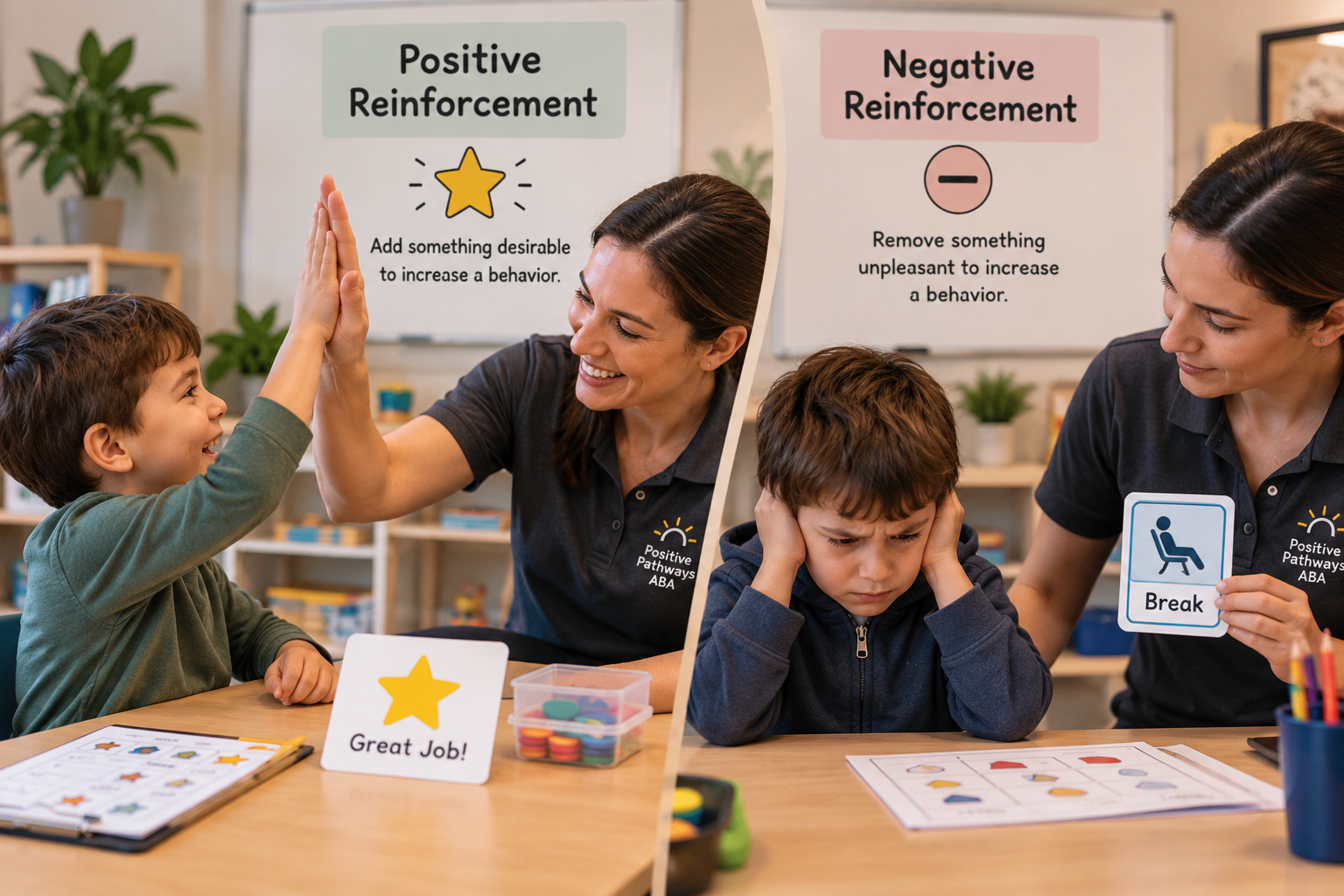

However, another issue also needs consideration: Where are the limits of ABA therapy?
Despite its benefits for many children that help them achieve significant progress, it is not a universal solution for all problems associated with autism. Like other therapies, ABA also has its own limitations and cannot be used as an ultimate treatment for autism.
Moreover, it does not necessarily resolve all emotional or sensory issues in children. Rather than seeing the limitations as negative, parents can use them to understand what to expect and how to select an appropriate treatment for the condition.
Generally, the best outcomes are observed when parents understand both the pros and cons of ABA therapy and take into account the child’s individual needs and desires.
Main Limitations of ABA Therapy Overview
Let’s get some information about its common limitations.
| ABA Limitations | Why It Matters |
| Cannot cure autism | Autism is a lifelong condition that does not go away |
| Focuses on behavior | May not fully address emotions or sensory experiences |
| Generalization challenges | Skills learned may not automatically transfer to real life |
| Time-intensive | Some programs require 25-40 hours per week |
| Cost and access barriers | Waitlists, insurance issues, and provider shortages can delay care |
| Results vary | Every child responds differently to therapy |
| Ethical concerns | Some older ABA approaches have been questioned |
| Not a standalone solution | Many children also need other therapies alongside ABA |
Each of these limitations deserves a closer explanation.
Limits of ABA Therapy for Autism
An additional limitation of ABA therapy is that it cannot cure autism. The significance of understanding that autism is a neurological disorder that influences a patient’s capacity to interact and communicate with other individuals and their ability to process information should be recognized.
In fact, there is no cure for autism, and there can be none at all. Therefore, the purpose of ABA therapy is to assist the patient in developing the necessary skills to cope with his or her problems.
For instance, a patient may be able to improve communication and social interaction skills and perform certain tasks independently. But still, this approach does not have any curative impact on autism.
According to the National Institute of Mental Health (NIMH) perspective, autism is a lifelong disorder. The parents should be made aware of this aspect. One of the main goals of applying ABA is not to change an individual’s personality but to enhance his abilities and foster self-reliance.
ABA Focuses on Observable Behavior Rather Than Internal Experiences
ABA is based on the study of observable, measurable, and trackable behavior.
Examples of observable behaviors include:
- Following instructions
- Requesting items
- Completing daily tasks
- Engaging in social interaction
- Demonstrating communication skills
This is one of ABA’s strengths because it allows progress to be measured clearly and consistently. However, this also creates a limitation.
Many important experiences happen internally, such as:
- Anxiety
- Fear
- Sensory overload
- Emotional distress
- Frustration
- Stress
A kid can look composed on the outside while feeling stressed on the inside. Although it observes behavioral cues, it cannot read minds or feelings because it lacks access to the child’s inner world.
This is why it is common for families who choose ABA therapy to use it alongside counseling, occupational, and speech therapy.
This will result in a much better understanding of the child’s requirements.
The Skills Learned in Therapy Do Not Necessarily Generalize to Everyday Life
While learning a particular skill in a therapy setting can be easy, applying that skill in everyday situations can be difficult.
Generalization is a common problem associated with it. One example could be learning to request help during therapy sessions. The child may succeed in requesting help from his therapist each time he attends therapy.
However, if the same situation occurs at a park, at school, or elsewhere, the child may find it difficult to apply that particular skill. This is so because there are different stimuli and conditions in each new environment.
To help with this, modern ABA programs try to:
- Teach skills in multiple environments
- Involve parents in the learning process
- Use real-life situations for practice
- Include home and community-based learning
Even with all these strategies, generalization still takes time. It requires practice and repetition over a long period.
ABA Requires a Significant Time Commitment
Another major limitation is the amount of time it may require.
Some studies of EIBI have discovered that some programs advise up to 25 to 40 hours of therapy weekly for their clients.
In particular, a study conducted by Dr. Ole Ivar Lovaas in 1987 found that children with more hours of therapy were more successful than those with fewer.
But the downside of such therapy is that it can be extremely exhausting for families.
A child’s weekly schedule often already includes:
- School
- Family responsibilities
- Medical appointments
- Activities
- Rest and free play
Adding additional hours of therapy to this list might result in overburdened days for the children as well as their parents.
In addition to that, there is also the fear among certain parents that excessive therapy could mean insufficient time left for other things, such as playing and spending leisurely time with family members.
Cost and Access Remain the Huge Problems
In some cases, even when the family is willing to take their child for ABA, it may not be possible.
It needs specialists, including BCBAs and RBTs. However, there may sometimes not be enough therapists available to perform these treatments.
Many families face long waitlists before services even begin.
Insurance Barriers:
Even when insurance covers ABA, families may still face:
- Coverage limits
- Prior authorization requirements
- Deductibles
- Copayments
- Documentation requirements
Navigating insurance can take a lot of time and effort.
Provider Shortages:
In many areas across the United States, there are not enough ABA providers to meet demand.
Rural Access Challenges:
Families in rural areas may face:
- Long travel distances
- Limited provider options
- Extended wait times
These barriers may cause delays in treatment and add to the stress experienced by families seeking assistance.
ABA Outcomes May Differ from Child to Child
Each child suffering from autism is unique, and ABA therefore leads to different outcomes among all patients.
While some children show rapid improvement in their communication skills and ability to interact socially, others face communication challenges. Some children may exhibit improvement in certain areas yet require assistance in other areas.
There are several factors that affect outcomes:
- Age when therapy starts
- Learning style
- Communication ability
- Family involvement
- Consistency of therapy
- Co-occurring conditions
- Quality of treatment
Because of this, ABA should never be seen as a guaranteed outcome. Progress should always be measured based on the child’s personal goals rather than comparisons with others.
The Quality of ABA Therapy Can Vary Significantly
Not all ABA programs are the same. The success of therapy often depends on the experience, training, and approach of the professionals involved.
A strong ABA program usually includes:
- Individualized goals
- Regular progress tracking
- Family involvement
- Ongoing BCBA supervision
- Data-driven decision-making
On the other hand, poorly designed or poorly supervised programs may not lead to meaningful progress.
Families should feel comfortable asking questions about:
- Staff qualifications
- Supervision structure
- Treatment goals
- Parent involvement
- Progress monitoring methods
The connection between the family and the therapy team is essential to achieving successful therapy.
Ethical Issues Related to ABA Therapy
During recent years, ABA has become increasingly open for discussion, particularly due to personal accounts from autistic adults.
Previous Criticisms
The older ABA techniques were mainly concerned with obedience and behavior reduction. Some of the earlier ABA programs aimed at forcing the autistic person to behave like a neurotypical individual rather than catering to his or her needs.
Obedience-Oriented Criticism
Certain autistic advocates claim that ABA treatment does not necessarily require obedience but should be directed at promoting autonomy and self-expression.
Changes that Modern ABA is Going Through Include:
- Choice-making
- Communication
- Independence
- Self-advocacy
ABA Cannot Eliminate Every Challenge Associated With Autism
ABA can help build important skills, but it cannot eliminate all challenges associated with autism.
These may include:
- Sensory sensitivities
- Emotional regulation difficulties
- Executive functioning challenges
- Social communication differences
- Anxiety and mental wellbeing
For instance, an individual can improve their communication skills while still feeling overwhelmed in noisy situations. Or they can minimize their frustrated behaviors while still having internal stress.
The Debate on Masking and Neurotypical Expectations
Masking refers to instances in which individuals on the spectrum modify their behavior to conform to social expectations.
This may include:
- Forcing eye contact
- Hiding stimming behaviors
- Copying social behavior
- Suppressing communication needs
The results indicate that extended mask usage can induce stress, anxiety, and emotional exhaustion.
This is why modern ABA practitioners have shifted their focus from ensuring the child looks like a “normal” individual to skill development.
Concerns About Reducing Harmless Stimming Behaviors
Stimming refers to repetitive movements or sounds such as:
- Hand flapping
- Rocking
- Humming
- Finger movements
- Repeating sounds
In the past, some ABA programs tried to stop stimming completely.
Today, many professionals understand that stimming often helps with:
- Emotional regulation
- Sensory processing
- Stress relief
Most modern ABA programs only address stimming if it:
- Creates safety risks
- Causes harm
- Impairs the ability to learn or carry out day-to-day activities
If this is not the case, it is considered normal behavior.
ABA Therapy Is Not a Substitute for Other Treatments
It can indeed be highly beneficial. It can greatly assist in developing various skills such as communication, behaviors, and self-care, among others. However, this form of therapy should not substitute for other necessary treatments.
Children can often reap the benefits of both due to different aspects of therapy.
Speech Therapy
Speech therapy helps develop children’s communication skills. Children can work to develop language, speech clarity, and social communication abilities.
Occupational Therapy
This therapy deals with basic skills and sensory issues. Children can work on developing skills related to dressing, writing, eating, and managing sensory sensitivities.
Mental Wellbeing Services
These are treatments designed to develop mental wellbeing. Such treatments include anxiety management and frustrations, among others.
Educational Services
Within the school setting, classroom-based interventions offer instructional support. These services help kids receive an education tailored to their learning preferences.
Combining ABA with the aforementioned therapeutic methods tends to promote more comprehensive development in the kid.
How Modern ABA Has Evolved to Address Many Limitations
The modern approach to ABA differs greatly from previous iterations of the technique. In today’s world, there is much greater emphasis placed upon flexibility and consideration, as well as the improvement of the quality of life for the child.
This has led to changes, including the use of less strictly structured techniques.
Natural Environment Teaching (NET)
NET involves learning and practicing skills in natural settings, such as playing at home or engaging in community interactions. Under such circumstances, children learn better than during therapy sessions.
Functional Communication Training (FCT)
Such an intervention strategy entails developing appropriate means of communication for children rather than indulging in behavior that leads to behavioral problems.
Neurodiversity-Affirming Practices
These practices seek to support and understand children without attempting to make changes in them. Neurodiversity-affirming practices encourage skill building while appreciating each child’s uniqueness.
Quality-of-Life Goals
The modern form of ABA therapy also emphasizes quality of life goals, including but not limited to:
- Independence in Activities of Daily Living
- Clear communication
- Safety awareness
- Positive relationships
- Self-advocacy and choice-making
These goals help ensure therapy is not just about behavior change, but about helping the child live a fuller and more meaningful life.
How Parents Can Evaluate Whether ABA Is Right for Their Child
Every child is unique, so decisions should be individualized.
Parents should ask:
- How are goals chosen?
- How is progress measured?
- How are parents involved?
- How do you support independence?
- How do you approach stimming?
Good ABA programs focus on partnership, not pressure.
Conclusion
Nevertheless, ABA therapy has been useful in developing crucial communication skills in numerous children. Unfortunately, it also presents several downsides. First, it does not cure autism, and secondly, it is unable to explain all the problems that an autistic person faces regarding their emotions and senses.
Third, it depends on the child, and parents may encounter obstacles concerning cost, time, and treatment quality. In turn, this treatment method is evolving. There are currently plenty of providers who use a modern approach toward therapy, such as Positive Pathways ABA, treating children more respectfully and addressing their individual issues.
Thus, once parents understand its benefits and drawbacks, they will be better able to make decisions about their child’s future.