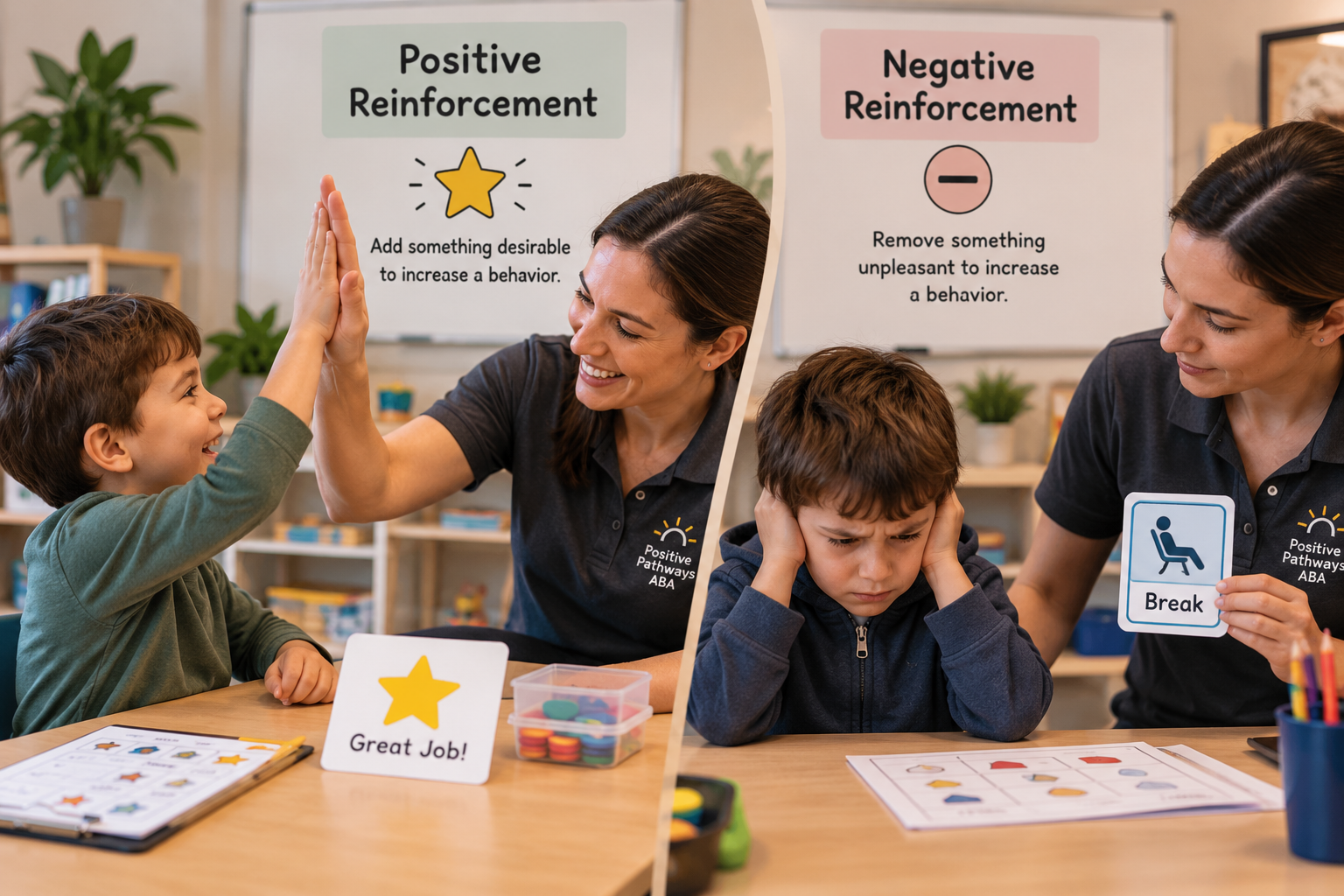

Eye contact is often seen as a sign of attention, interest, and connection. However, for some autistic children, direct eye contact can feel intense or overwhelming, making social interactions more difficult. This doesn’t necessarily mean they aren’t listening or interested in communicating. Parents exploring ABA therapy may also wonder how to support their child’s communication skills while respecting their comfort with eye contact.
Why Do Autistic Children Find Eye Contact Difficult?
1. Eye Contact Can Feel Overwhelming
2. Looking and Listening Can Be Difficult at the Same Time
3. Social Situations May Require Extra Effort
4. Sensory Differences Can Affect Comfort
5. Anxiety Can Make Eye Contact Harder
Should Parents Force Eye Contact?
No, parents should not force their child to make eye contact. For some children, direct eye contact can cause discomfort or interfere with concentration. Instead, parents can use positive reinforcement to encourage communication through words, gestures, facial expressions, or other methods that feel comfortable for their child.
The first thing we would like to remind you is to start exploring the issue from your son’s point of view first. Does eye contact have any impact on your son? Does it assist him in focusing on the dialogue or not?
Perhaps it’s so demanding to make eye contact that your son doesn’t listen at all. Here, it’s appropriate to seek out other means your son can use to show others that he is interested and listening to them.
For example, you could explain that he can show others he’s interested and listening through non-verbal communication, such as gestures or body language, and encourage him to try some of these options:
- Encourage your son to express his interest by turning to the person and maintaining a conversation distance. This involves correcting an inclination to roam the conversation.
- Teach your son that he can make some socially appropriate statements to let people know he is listening. For example: saying “yes” or “okay” or even “hmm-hmm.” It’s crucial that you teach him when the other person takes a break – not when they are talking. You can practice the timing together, the two of you.
- Your son may even say, “I’m listening although I don’t see you.”
Does Avoiding Eye Contact Mean a Child Is Not Paying Attention?
A child can watch something in the room, listen to the recording, and then focus on a different spot in the room, a toy, etc. Other children may demonstrate attention via gestures, verbal reactions, movements, or facial expressions.
How Can Parents Build Social Skills?
Parents can help autistic children develop social communication skills through natural, comfortable everyday interactions. Rather than eye contact, try to encourage and facilitate other activities like taking turns in games, answering questions, sharing interests, etc. These normal interactions can assist children to grow self-confidence and develop connections with people without feeling pressured.
How Can Parents Support Their Child at Home?
- Do what your child wants to do. Take part in activities they like and talk without trying to make eye contact.
- Speak in simple, direct terms. Make simple inquiries and allow your child to respond within a reasonable time frame.
- When your child requires your help with concentration, choose the quietest location.
- Let your child look away when talking or listening.
- Watch for other ways of communication such as gestures, words, actions, expressions.
- Acknowledge your child’s efforts to communicate, whether they use words, gestures, facial expressions, or other methods to express their needs and ideas.
- If communication is difficult, a speech-language pathologist or autism-informed professional can assist in determining helpful strategies.
When Should Parents Seek Professional Guidance?
If you are worried about your child’s communication, social interaction, or development, please speak to a healthcare professional. Recognizing the early signs of autism in toddlers can help you determine if an evaluation is needed. A specialist can consider your child’s progress and decide if it would be helpful to carry out more tests or provide targeted support.
Final Thoughts
Autistic children may find eye contact challenging for a number of reasons, such as sensory differences, social demands, discomfort, and anxiety. If a child is looking away, it doesn’t necessarily mean he is not listening or interested.
Parents can impact their child’s life in a positive way by decreasing pressure, accepting their child’s communication style, and emphasizing connection over appearance. A child doesn’t need to maintain eye contact to communicate meaningfully, build relationships, or feel understood.