
What Is ADHD and How Can It Affect Children?
Attention-deficit/hyperactivity disorder, known as ADHD, is a very common condition that can impact a child’s attention, impulses, organization, and behavior. Children with ADHD might struggle to pay attention in tasks, listen to instructions, take turns, control emotions, or get through daily activities. These difficulties can impact their school and home life, their behavior with others, and their self-assurance.
Can ABA Help Children With ADHD Focus?
What Helps Children With ADHD Improve Listening?
Children with ADHD may find it hard to listen and follow instructions, especially when they are given multiple directions at once. It can make daily tasks at home, at school, and elsewhere more difficult. ABA therapy for ADHD helps children become better listeners through easy and step-by-step practice.
The therapists start with simple instructions and slowly add more steps as the child improves. They also use praise and rewards, which encourage children to listen carefully and follow directions.
- Helps children listen when someone is talking.
- Teaches them to follow simple and longer instructions.
- Improves listening during school and daily activities.
- Builds confidence by helping them complete tasks with less help.
Why Is Positive Behavior Important in ADHD?
Children with ADHD may act before thinking or interrupt others and find it hard to wait for their turn. These behaviors happen because of ADHD, not because the child wants to misbehave.
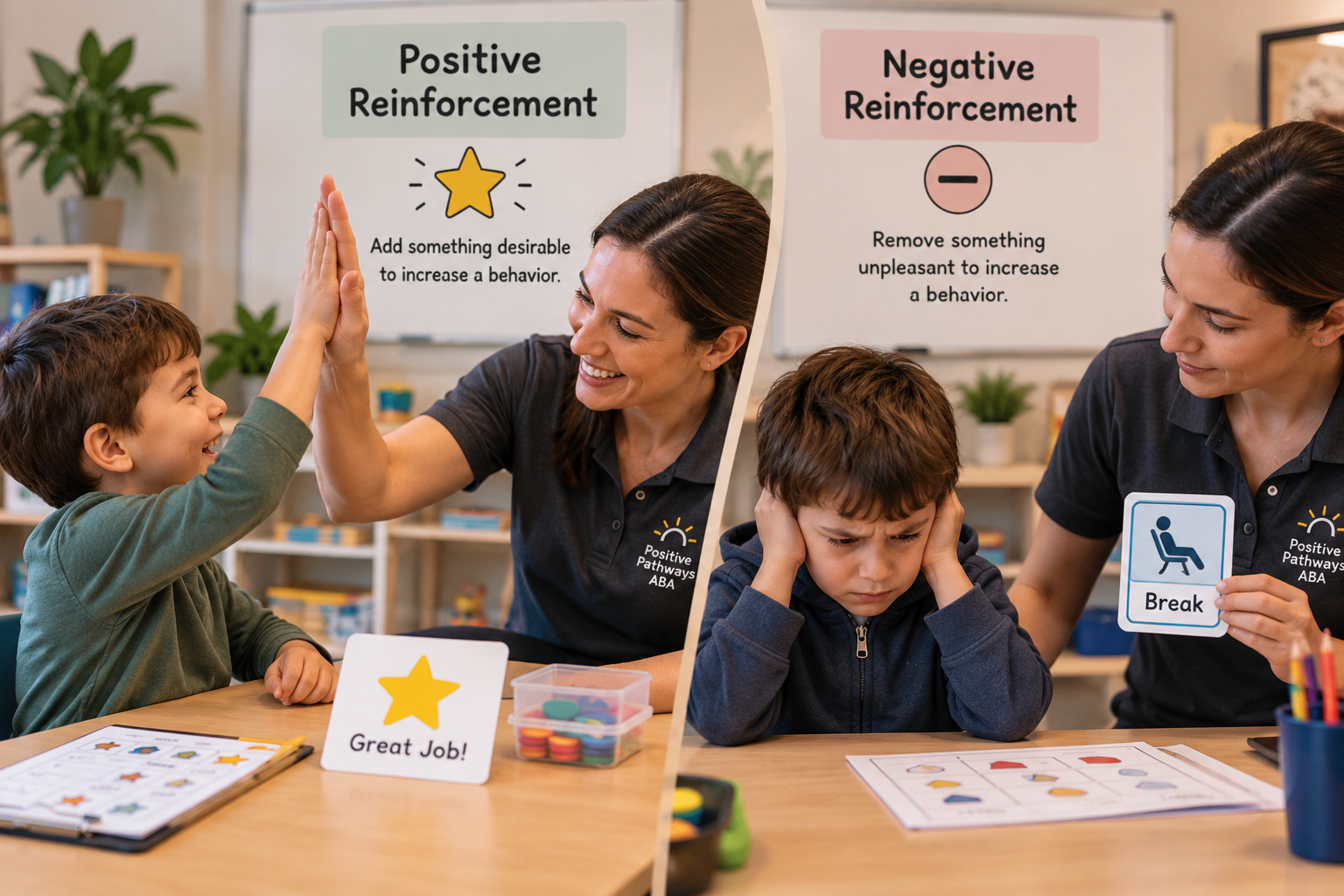
Praising and rewarding positive behaviors may be an effective way to help children with ADHD practice positive behaviors by using the approach of ABA therapy. Therapists reward children when they follow directions, make good choices, and stay calm. It helps children want to repeat those good behaviors.
What Helps Children With ADHD Stay Organized?
Many children with ADHD find it tough to stay organized and follow everyday routines. They may overlook their homework or lose school supplies and want many reminders to complete simple tasks. Things like getting dressed, packing a school bag, and doing homework can be difficult. The ABA therapy for ADHD teaches children simple methods to stay organized and follow everyday routines.
Helps Children Become More Independent: As children learn to stay organized, they want fewer reminders from parents and teachers. They become more confident and can do more things on their own.
How Can ABA Improve Social Skills?
Strengthening social skills is a key part of behavior therapy for ADHD, as good friendships help children feel happy and confident. Many children with ADHD need to make friends, but they may interrupt others or have trouble waiting for their turn and miss social cues. Therapists use exciting games or role-playing, group activities, and real-life practice to teach children how to say hello, take turns, listen carefully, make eye contact, and speak kindly.
Can ABA Support Emotional Control?
Children also learn to know their feelings before they become too strong. Therapists use simple games, pictures, stories, and role-playing to teach children about their emotions and how to respond more effectively. Parents also practice these skills at home so children get the same support each day. Avoiding common mistakes parents may make during ABA therapy can also help ensure children receive consistent support. With regular practice and praise, children learn to stay calm, solve minor problems, and feel better faster after getting upset. These skills help them do well at home or at school and with their friends.
Final Thoughts
In general, ABA therapy can teach some children with ADHD some important skills in their daily lives. It can help with skills like focus, attention, listening to instructions, emotion regulation, and social interaction. Children also learn good habits through simple steps, praise, and consistent practice. Since every child is different, therapy is intended to match each child’s desires and learning style.
Children make the most progress when parents, teachers, and therapists work together. Practicing these skills at home, at school, and in the community benefits children who use them each day. Knowing what to expect when starting ABA therapy can help parents feel more prepared to support their child throughout the process. Over time, small improvements can make a great change in their confidence, independence, and learning. With patience, support, and consistent practice, ABA therapy for ADHD can help children grow, become more independent, and do well in many areas of life.