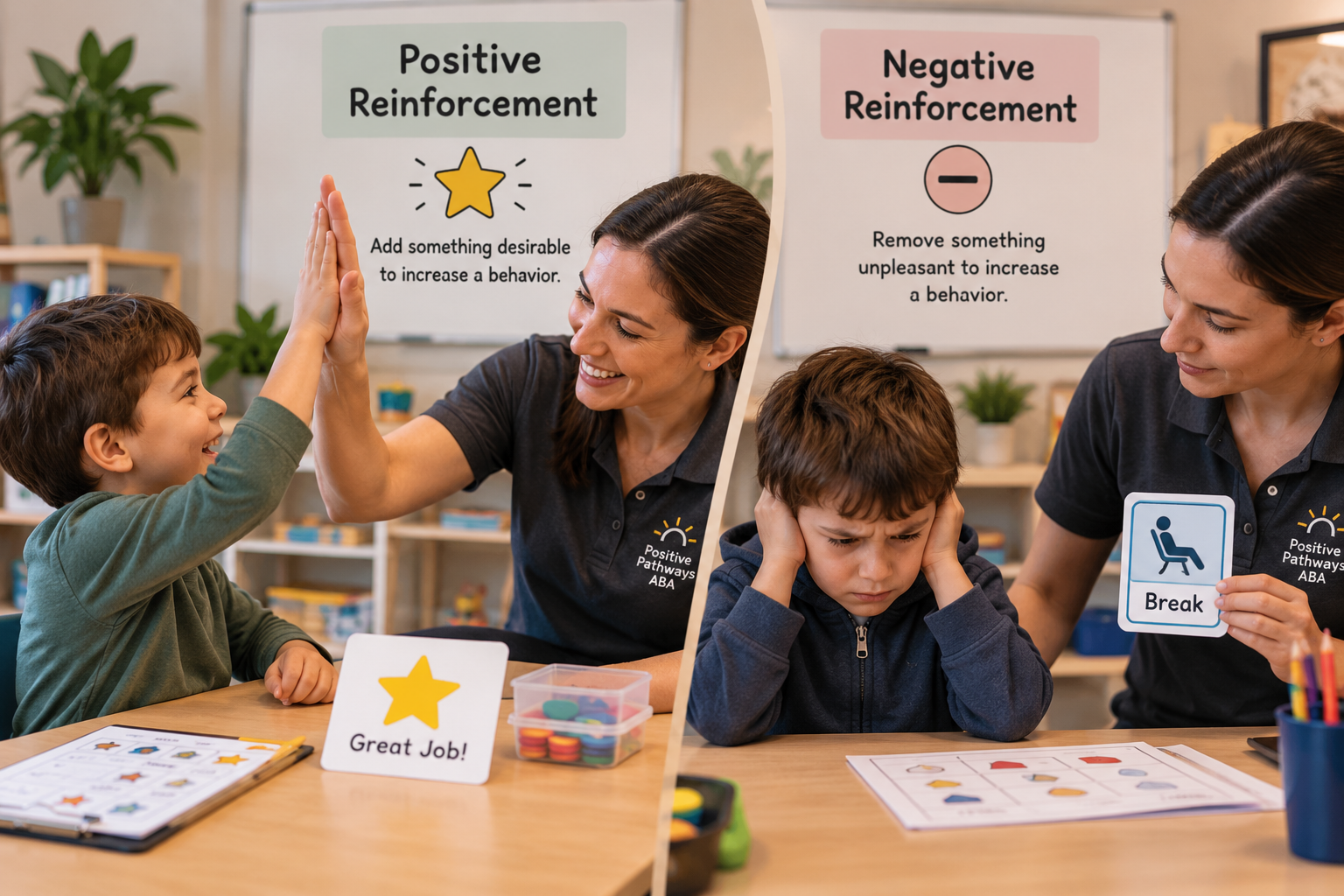

The onset of ABA therapy can be an emotional time. You might feel hopeful about the support your child will receive, yet you may be wondering what it will really look like.
While each child’s journey with ABA therapies may be unique, knowing what lies ahead can help to make the process feel more comfortable and predictable. The first step of ABA therapy is to understand your child, establish trust, and develop a plan that meets each child’s specific needs.
These are some things to expect when starting ABA therapy:
Step 1: A Simple First Call
Typically, the first step in your ABA therapy journey is a discussion with the ABA team.
This first call will give you a chance to share with the person you are calling to discuss your child, what you have observed, concerns you may have, and the goals you want to pursue. It’s a time for your team to get to know your family, and for you to ask questions about how to do ABA therapy.
Often, families enter this first conversation without knowing what to anticipate. It’s perfectly fine! The purpose of this call is to clarify, answer any questions, and to help you understand if ABA therapy is a possibility for your child.
This initial conversation is NOT an assessment or test. It’s just the start of a team effort between your family and the therapy team.
Step 2: Assessment and Creating a Personalized Plan
Following the conversation, the clinician will take some time to develop a more intimate understanding of your child. The assessment will allow the therapy team to gain an understanding of your child’s skills, strengths, interests, communication style, and the areas your child needs extra support.
In addition to identifying challenges, the ABA assessment will also look at what is rewarding for your child and which approach might allow your child to learn best.
The assessment may include looking at areas such as:
- Communication skills
- Social interactions
- Skills in learning and playing
- Daily routines
- Ability to be independent and self-help
After the assessment, your child’s treatment plan is developed based on specific needs for your child. This plan identifies realistic objectives and approaches to support your child’s progress.
Each child would have a different plan for ABA therapy because each child is unique. Your child’s focus is always on making progress that is relevant to your child’s life.
Step 3: Beginning ABA Therapy Sessions
The initial ABA therapy sessions are about an important thing: building trust.
Children need to feel comfortable with their therapist and environment before they can take full advantage of the learning that takes place. The first sessions allow your child to get used to the routine, interact with their therapist, and take part at their own rate, whether it’s in-home or center-based therapy.
Activities that are fun and motivating for your child are used in ABA therapy. Learning can take place when it is spontaneous and interesting, in play, in conversation, in everyday activities, and more.
At this time, therapists concentrate on establishing a positive relationship with your child. Children feel safe, secure, and confident as they begin learning new skills through a strong connection.
Step 4: Learning Skills That Support Everyday Life
Throughout the course of therapy, your child will learn skills that will help them make everyday experiences easier and more successful.
ABA targets practical skills that contribute to independence, communication, and participation in everyday activities. Therapy can focus on any of the following areas, depending on your child’s objectives:
- Expressed needs and feelings
- Building social connections
- Following everyday routines
- Developing independence
- Assisting with new behaviors and coping skills
These skills are divided into smaller steps so that children have opportunities to practice and experience success along the way.
Progress isn’t a matter of achieving a goal right away. It’s more about giving your child opportunities to learn, try new things, and develop self-confidence over time.
Step 5: Ongoing Communication With Your Family
Parents/caregivers are a valuable part of the ABA therapy process. Learning how to support your child at home, understanding their needs, and avoiding common parents’ mistakes can help create a more consistent and positive learning environment.
Your therapy team will provide you with information regarding your child’s progress, address your child’s goals, and assist you in understanding what your child is learning in therapy sessions. There will also be chances to ask questions and discuss your observations from home.
Children’s progress is best when they are supported by ABA therapy in multiple settings. Therapy strategies can be brought into the home and community, where your child can practice them every day.
Your therapy team can help you with making ideas about how to:
- Talk and interact with them throughout the day
- Allow opportunities outside of therapy for skill development
- Promote positive learning experiences at home
Don’t try to solve all the problems by yourself. Your therapy team is available to help and support you on your journey.
Step 6: Progress Tracking and Adjusting Goals
An important part of the ABA therapy process is that it can continue to change and grow, as your child does.
As part of the therapy process, your child’s therapist will assess your child’s progress periodically through scheduled intervals in order to determine areas where goals are being reached and where challenges are still being met.
Each child also experiences progress differently. Progress may mean that the child has learned a different way of communicating, has learned to better handle a given situation, or has become more independent in executing daily routines that may require engaging in various activities.
In the absence of a critical eye, some milestones may appear less important and, on the surface, small and insignificant to the untrained but involved adult. It is important to bear in mind that each small step is significant and ultimately cumulative in the progress your child is making over the course of the therapy.
Progress Takes Time
When beginning ABA therapy, one of the main points to keep in mind is that there is no such thing as overnight success.
Each child has their own pace. Meaningful changes are often the result of repeated practice and family involvement in ABA therapy. Change can come sporadically. Some changes can happen quickly, and some can take time.
Progress can be the accomplishment of performing an interaction, saying a new word, completing a recurring routine, or even doing something outside of their comfort zone.
ABA therapy allows small successes to be celebrated and built upon, and the positive attributes of your child to be worked on to help them gain new skills, feel more self-sufficient, and increase their self-worth.
A New Beginning for Your Child and Your Family
Beginning an ABA program means beginning a collaborative effort to help your child reach their fullest potential.
Along this journey, you can expect to experience uncertainty; however, support will be available. Your therapy team will be there to collaborate with you, cheer you on, and develop a variety of adaptive strategies to help your child reach their full potential.
Progress happens in small steps. The addition of a new skill, a new meaningful interaction, or an accomplishment of any size happens on a journey that is uniquely your child’s.
Learn more about our ABA therapy services in Brooklyn and how we support children and families.